Updated: 4/1/2022
The other day I was thinking about my passion for travel. Namely, I was trying to figure out when that started and how it became a passion. Where wanderlust began…
My first taste of travel wasn’t until I was five. My mom had remarried, and we moved to the US. At that time, I only knew and spoke Spanish. Today, I speak both English and Spanish, though differently. Now, I have an American accent! I’ve gone back to visit family over the years. In hindsight, those early trips were full of thrill and adventure — a feeling that was long remembered.
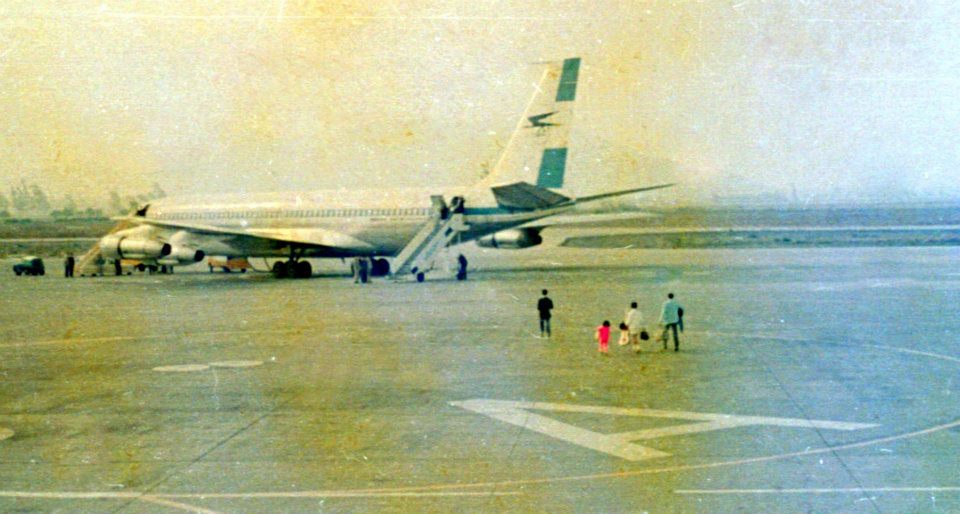
Growing up in the Midwest, my understanding of other places worldwide and their cultures was found in magazines and school books, with the occasional class videos. Often, they were in exotic locations where the people or natives typically dressed sparingly. As a child, secluded in my suburban pre-internet world, there was no pull yet—just mild curiosity.
I was in fifth grade when our family eventually returned to Santiago, Chile. I remember spending most of my time at my grandmother’s house from the trip. One memorable touristy experience was visiting San Cristobal near downtown Santiago. Part of the fun was taking the funicular to the top. At the top, a commanding statue of the Virgin Mary overlooked the city and offered a magnificent view. Its panoramic view of the Andes and the town of Santiago held me spellbound for quite a while.
The best memories of the trip are vivid and close to my heart. One such was breakfast on the backyard patio among the apricot and lemon trees while having Cafe con Leche (coffee with milk) and marmalade on steaming fresh crusty bread purchased earlier that morning from the bakery around the corner. I also remember helping in the kitchen one afternoon, feeling the breeze through the windows —cooling the room to the perfect temperature. I watched the adults move around each other in what had become a tight space. Each gracefully avoiding the others as if in a choreographed dance—it plays in my mind in slow-motion memory: dust motes drifting through intermittent rays of light, clothes undulating and rippling with movement, faces brightening with the warmth of ongoing conversations.
Then there was the night my grandma Emma hosted a large family meal. I felt self-conscious about my Spanish, no longer the fluid speech of a native. Family teased me good-naturedly, calling me a ‘Gringa.’ Instead of being my usual chatty self, I found comfort in quietly observing, listening to the flowing conversations and spirited banter. The highlight was watching my grandma transform into a lively and animated person after a couple glasses of wine, even raucous when she played an enthusiastic number on the piano. She was a true patriarch, and in retrospect, my favorite memories are when she let loose a bit, letting her less composed self come out.
In eighth grade, I went on a class trip to New Orleans with the school band, traveling by Amtrak. The 835-mile journey from Chicago took over two days, winding through countless small towns. We usually passed through the main streets, but not always. A few places were actual shantytowns, which left me stunned—I hadn’t realized such poverty still existed. In my middle school mind, I thought that level of hardship was something you only saw in third-world countries.
The city of New Orleans was beautiful and full of life. Our hotel was about a fifteen-minute walk to the French Quarter. One night, I got separated from our small sightseeing group and the chaperone, unable to find them. Unsure of what else to do, I had a rough sense of the direction back to the hotel, so I decided to make my way there. Eventually, my walk paid off. In the distance, I spotted the hotel—a clear view, which was not a road but a broad, overgrown stretch of land with a train track running through the middle, flanked by rugged industrial buildings.
Up until that moment, I had been anxious, but finding the hotel filled me with relief. I wasn’t about to lose sight of it by searching for a proper road. So, I cut across the rough terrain—crabgrass, litter, and train tracks—determined to get there. It was a nerve-wracking walk, but it offered me an unfiltered view of the city and opened my eyes to perspectives I hadn’t expected. Instead of dampening my trip, it made it more exciting. I had done this myself. More than that, it left me reflecting on the trip, sparking a curiosity to understand people and places more deeply.
When I finished high school, I had almost half a year before heading to Marine boot camp. That allowed me to visit my father and sister in Cali, Columbia. She was in med school then, and my father taught at the same university, Universidad del Valle. I even attended one of his classes. It was all about cocci (bacteria, apparently). I may have fallen asleep- lol! Shhh.
My Columbian travel education started as soon as we left the airport. On the ride to my father’s house, I immediately began to see clear and distinct poverty street after street. My father pointed out some wealthy neighborhoods noting how almost all were gated. I don’t remember seeing any middle-class-type communities on that drive. I’m sure they were there, but I was in a bit of shock.
The car ride from the Cali airport to my father’s home was the same scene of shanty homes I had seen on the Amtrak years before, but exponentially so. Santiago was my only reference for what a third-world country looked like, and this was nothing like Santiago. In talking to my father and sister, I understood that Columbia, like many third-world countries, has quite a small middle class. For most, you’re either wealthy or poor. Theirs, my father, sister, and my other grandma – abuelita Blanca, were part of that tiny middle class.
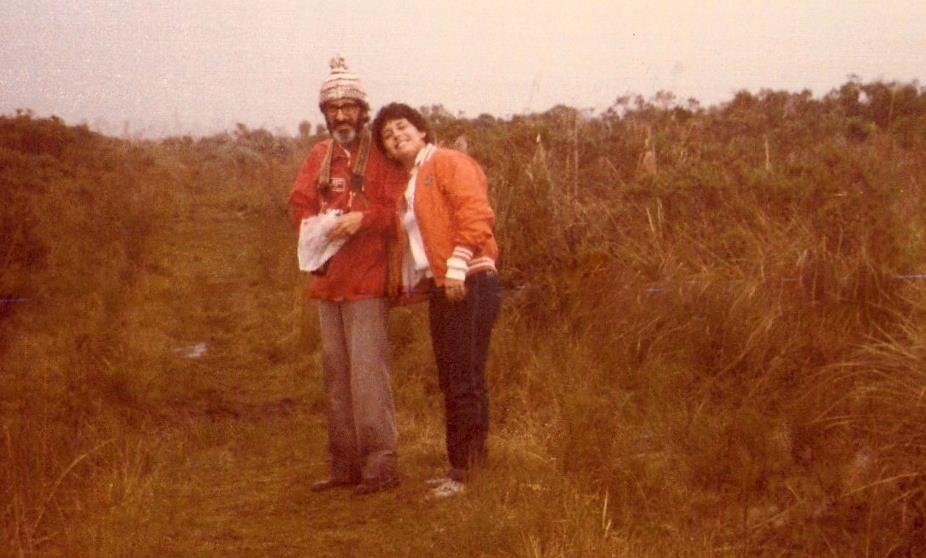
Visiting the university campus and attending some classes with my sister was entertaining. It was exciting to meet her friends and hang out with her and them. The drinking age was lower, so clubs, bars, and enjoying the freedom of youth were at my fingertips. I soaked it all in. Over the two months, I was in Columbia, we visited other areas. My father took me on a long drive high into some mesmerizing mountains. At times the road felt like it barely clung to the steep hillside, and looking down made my stomach lurch. I watched the vegetation change as we traveled higher in altitude and we added to our layers of clothing. The little villages got smaller and appeared less often. We stopped at a plateau with a large lake on the way up. The sense of the place was surreal. Clouds hung low that much of it touched the ground. The vegetation had continued to shrink, looking like a miniature of their regular counterparts. Much of it glittered, dappled in ice crystals. It felt like I had walked into a mystical winter fairyland.
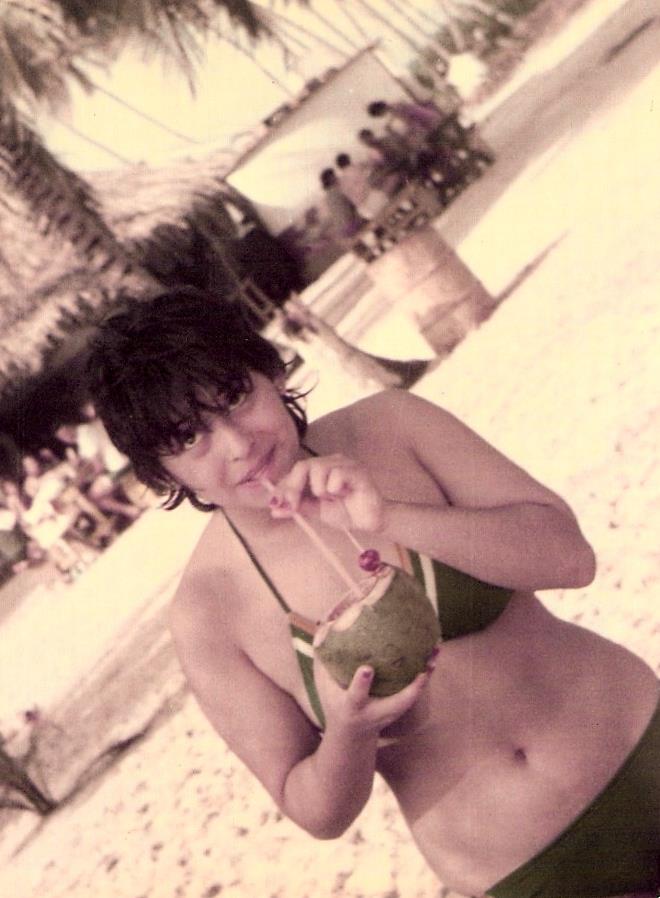
On a much warmer trip, my sister and I went to one of the little islands off the coast of Columbia, considered the Caribbean. As expected, we found pristine beaches, clear blue waters, equally clear skies, and lots of young people. We parked ourselves on one of the beaches each day and enjoyed Latin dancing at the local clubs at night. It was a fun, decadent trip.
People in Santiago and Cali were very much like those in the Midwest. The languages changed, yes. There were cultural differences, some subtle, some not. But there were so many commonalities, particularly with families. Not that I philosophized about these things then. Today though, it’s part of the fabric of memories that spurs the nomad in me.
I’ve always thought of passion as coming in strong and staying hot, an obsession. I now know that passion can quietly smolder unobtrusively until it flares. Once rekindled, invokes action and results in seeking out new and unknown places.

 Thoughts of a Nerdy Writer